Page 58 of 61

The Froggers

The Froggers

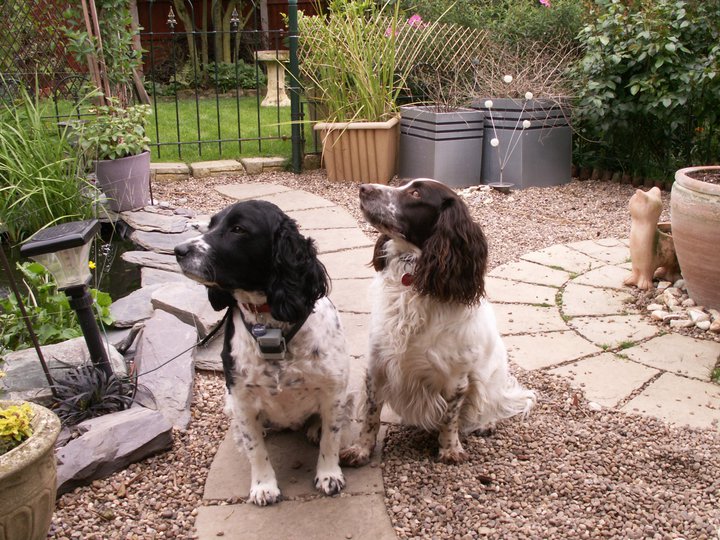
 My garden pond is teaming with wildlife at the moment. We have Koi Carp, Goldfish, a couple of Green Tench and a few dozen newts, frogs and toads. I also have two energetic Springer Spaniels. Both of them are accomplished frogger’s, Molly, my black and white Springer, could frog for England at the ‘frogging Olympics’ if such an entity existed.

She is so accomplished that she sometimes comes trotting into the house with three frogs at a time, her mouth gently but firmly closed over fat bodies, leaving a tangle of green legs hanging out of the sides. Usually though, it’s only one unfortunate creature that has been caught unaware s as it came out of hiding, thinking it’s safe to go about catching dinner.

Maisie, my liver and white Springer, isn’t quite as adept at catching them, though she could still be an international at the event. She likes to see them jump, so she’ll give them a whack with her paw, then chase after them and repeat the exercise until they are steered in the direction of the pond. She knows they live there; she saw them in the bottom when we dug it out a month or two back.
Once the escapee is back in its watery gaol, she’ll go in search of another, looking under shrubs, stones and bits of old log we have scattered about the place.

Occasionally she’ll pick one up and trot around the garden with it. If we spot her, a quick ‘leave’ will see her cough up the absconding prisoner. She will then guard it carefully until we, the warders, stroll up to return the inmate to its watery cell.

Molly doesn’t give up her prize anywhere near as easily. She is a hoarder, a collector, an expert on the species. It really doesn’t matter if she has a frog or a foul-tasting toad. Once they are caught, they don’t get released until they been carefully inspected, catalogued, sized and sexed. We always groan when we see her with one, as we know what a tough job we have ahead of us, trying to negotiate a ransom.

Continue reading

The Winter of 63

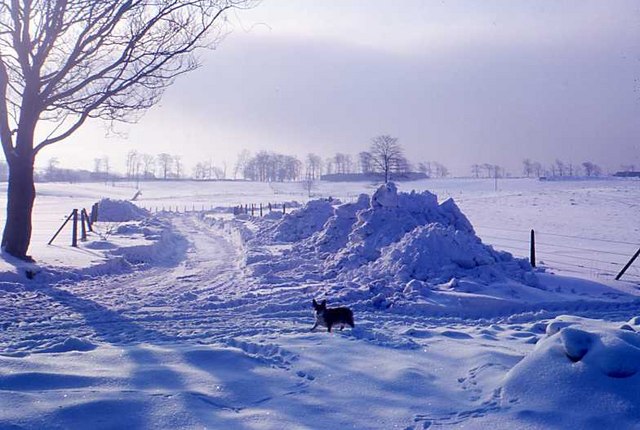
By Richard Johnson, CC BY-SA 2.0, https://commons.wikimedia.org/w/index.php?curid=6589924

Another of the articles I wrote for Best of British magazine.

Winter is almost upon us once again. I wonder what the next few months have in store for us weather-wise?

Looking back, I can’t remember many bad winters over the last forty odd years, none that match the winter of 1963 at least. It stands out in memory as the worst (and best) winter I have ever experienced; I was nine at the time.

We kids welcomed the snow and all the extra time off school. We made snowmen, toboggans from bits of old wood or old pram parts and the most lethal pavement slides you ever saw. We had one on our road that would carry you a good twenty five yards. Adults hated us for making them; as I said, they were lethal. Once a fresh covering of snow had landed there was no telling it was there until an unsuspecting adult tried to negotiate the pavement. I can remember my father getting a letter from the milkman saying we would have to pay for any more breakages ourselves. The slide was there for almost three months so you would think he’d have remembered where it was after his second or third fall.

Continue reading

After The Flood

In the early 1960’s we moved from our old Victorian slum to a brand-new house on a brand-new estate in Kirk Hallam, Ilkeston. I was about seven at the time

The old house, which was tied to my father’s job at the iron works, had been flooded. We lost just about everything; the waters had come half way up the stairs.

The flood struck at 8.am on Sunday 4th December 1960. The normally placid Nutbrook stream, swollen by heavy rain, burst its banks and flooded the Ironworks and the bottom half of Crompton Street. The water carried a hidden danger in the form of highly flammable, Benzoline oil that sat on the surface of the water. I didn’t know until years later that the oil had been a problem. I remember my father sitting on the sill of the upstairs window of our house as he smoked and chatted to the people next door. Cigarette stubs were flicked into the water at regular intervals.

We were rescued by the fire brigade who took us all to a community centre where we slept in sleeping bags on the floor for a few nights.

It was a major adventure for us kids but not so much fun for the parents or the older members of the community. I could have slept on a clothes line in those days but I doubt some people there got a wink of sleep.

We were fed soup and sandwiches by the Salvation Army. Before the evening meal we all had to stand and sing ‘I’ll be a sunbeam.’ My father, a reluctant Christian at best, would move his lips like a poor ventriloquist then burst into song on the final line of the chorus.

A sunbeam, a sunbeam,
Jesus wants me for a sunbeam;
A sunbeam, a sunbeam,
A bloody fine sunbeam am I.

During the day we played Beetle, Draughts, Snakes and Ladders and Monopoly. The older residents must have been sick to death of Ludo, but they gritted their teeth and played on. I think they’d have done anything to keep the more energetic kids on their backsides, sat at chairs and tables instead of hurtling around on the parquet floor.

Continue reading

Peggy Larkin’s War; Back To The Blitz.

Children of an eastern suburb of London, who have been made homeless by the random bombs of the Nazi night raiders, waiting outside the wreckage of what was their home. September 1940. New Times Paris Bureau Collection. (USIA) Exact Date Shot Unknown NARA FILE #: 306-NT-3163V WAR & CONFLICT BOOK #: 1009

Chapter One

‘See who’s at the door, please, Peggy.’

Mrs Henderson pulled open the heavy blackout curtains with a grunt. The late August sun lit up the cosy sitting room, highlighting the floral pattern on the square of carpet that sat neatly between the brown, horsehair sofa and the high-backed chair that nestled next to the open fireplace.

‘It’s the postman.’

Peggy Larkin walked into the lounge carrying a handful of brown envelopes. She handed them to the tall, grey haired woman, who had been Peggy’s guardian since she had been evacuated from London to the big house in the small country village, almost a year before. Their relationship had begun poorly, but over time it had flourished and they had become very close.

Mrs Henderson flicked through the letters and selected one with a London postmark. She recognised the fine, neatly-spaced handwriting, immediately.

‘Ah, a letter from your mother, Peggy. Let’s see what news she brings us.’

Mrs Henderson picked up a small silver knife and slid it across the top of the envelope. She took out the two-page letter and scanned the first page quickly before handing the second page to Peggy.

‘Here’s your share.’

She smiled broadly as she re-read the first page, then sat down on the sofa as she waited for Peggy to read her portion of the letter.

‘Aunt Margie is getting married!’

Peggy looked up from the letter, a huge grin on her face.

‘And Mum wants us to go home for the wedding!’

Peggy danced around the room, clutching the letter to her chest.

‘It’s only for a few days,’ Mrs Henderson advised. ‘Your mother thinks you’ll be safe enough in London for a short time at least. The bombing everyone thought would come, hasn’t materialised.’

‘I know,’ Peggy replied. ‘Some of the evacuees in the village went home at the start of the school holidays and they haven’t come back. People think it’s safe now. My teacher, Mrs Johnson, says the Germans might not bomb us at all. Mr Hitler seems to be busy fighting in France.’

‘We’ll have to see about that,’ said Mrs Henderson. ‘Don’t count your chickens before they’ve hatched, Peggy. It’s not safe to go back for good.’ She folded the letter and slipped it back into its envelope. ‘Anyway, on a selfish note, I’d miss you too much, and your mother has a very important job at the armaments factory. With the long shifts she has to work, I doubt she can find the time to look after you as well.’

Peggy nodded.

‘I know,’ she said sadly. ‘Mum works twelve hour shifts at different factories around London, she has to train women how to make the bombs and mines as well as doing her own job. It’s very dangerous work.’

Peggy was quiet for a few moments, then she stepped across the room to give Mrs Henderson a hug.

‘I’m very happy here. It will be nice when I can go home, but until then, I know you’ll look after me.’

Mrs Henderson hugged Peggy tight.

‘It’s been a pleasure my dear.’ A tear ran down her cheek. She hurriedly turned her head and dabbed her face with a white, handkerchief as Peggy pulled away.

‘Something in my eye,’ she sniffed.

Mrs Henderson walked through to the kitchen, shook the kettle, decided there was enough water in it to make tea, and placed it on the hob.

‘We have to make plans,’ she said. ‘We’ll need to check train timetables, buy tickets…’ She placed both hands on Peggy’s shoulders, her eye wide in excitement. ‘… and you’ll need a new dress to wear. We only have a couple of weeks to get ready. Your auntie’s fiancé has only got limited leave. He’ll have to go back to his regiment the day after the service. It’s all a bit rushed, but that’s what young people have to do today, what with the war and all.’

‘Are you coming too?’ asked Peggy.

‘Oh, I’m not invited,’ laughed Mrs Henderson. ‘It’s only a small, family occasion. So, we’ll need to find you a chaperon.’

‘A chapel what?’ Peggy looked confused.

‘It means a companion,’ explained Mrs Henderson. Someone to travel with, to make sure you get there safely.’

‘Harry can be my chappie, thingy,’ replied Peggy.

‘Your brother’s younger than you, dear,’ said Mrs Henderson with a little laugh. ‘I bet he’s had a letter too; we’ll have to drop in at the Watsons’ to organise things.’

Peggy and her younger brother had been split up the day they arrived. Harry was staying with a middle-aged couple on the other side of the village.

‘I think Harry’s forgotten all about Mum,’ said Peggy softly. ‘He never mentions home when I see him.’

Mrs Henderson patted Peggy on the shoulder.

‘I’m sure he remembers her; he’ll be just as happy as you are to go back to London for a while.’

‘I’m not so sure,’ said Peggy with a shake of her head. ‘He’s changed so much over the past year.’

‘Don’t worry about him, Peggy,’ said Mrs Henderson, softly. ‘He’s just settled in very well, that’s all. It’s a good thing really, you wouldn’t want him to be unhappy now, would you?’

‘He calls them Mum and Dad,’ said Peggy, ‘but they’re not.’

‘No, they’re not,’ replied Peggy’s guardian, ‘and I’m sure he knows that. It’ll just be a habit he’s gotten into that’s all.’

Their conversation was interrupted when they heard a frenzied, hammering on the front door.

‘Goodness me,’ said Mrs Henderson. ‘Something sounds urgent.’

She hurried to the front door and flung it open, Peggy rushed along behind.

On the doorstep stood a young boy. His hair was close-cropped, he wore a dirty, white shirt, trousers that were torn at the knee, and mud-caked boots, which he scraped on the edge of the step as he waited.

‘ALFIE!’ cried Mrs Henderson. ‘What on earth is the matter?’

Alfie was a few months older than Peggy; he had been evacuated to a nearby farm at more or less the same time that she had arrived in the village. He and Peggy were best friends and had shared a scary adventure.

‘Nothing much,’ said the boy, looking puzzled. ‘Can Peggy come out to play?’

Mrs Henderson blew out her cheeks.

‘Thank goodness for that. I thought someone had come to tell us the Germans were invading the village.’

‘They’re tied up in France,’ said Alfie seriously. ‘I heard it on the news this morning.’

Mrs Henderson turned away and returned to the kitchen. Peggy walked out onto the front step. She waved her letter at Alfie.

‘I’ve got exciting news,’ she said. ‘I’m going back to London in a couple of weeks.’

‘London!’ he exclaimed. ‘Brilliant news.’ He stared at her; excitement written all over his face.

Peggy grinned.

‘Mrs Henderson is going to find me a… a, chappie something… Someone to look after me on the journey.’

‘There’s no need for that,’ said Alfie. ‘I’m the only chappie you need. I’m going to come with you.’

« Older posts Newer posts »

© 2026

Theme by Anders NorénUp ↑